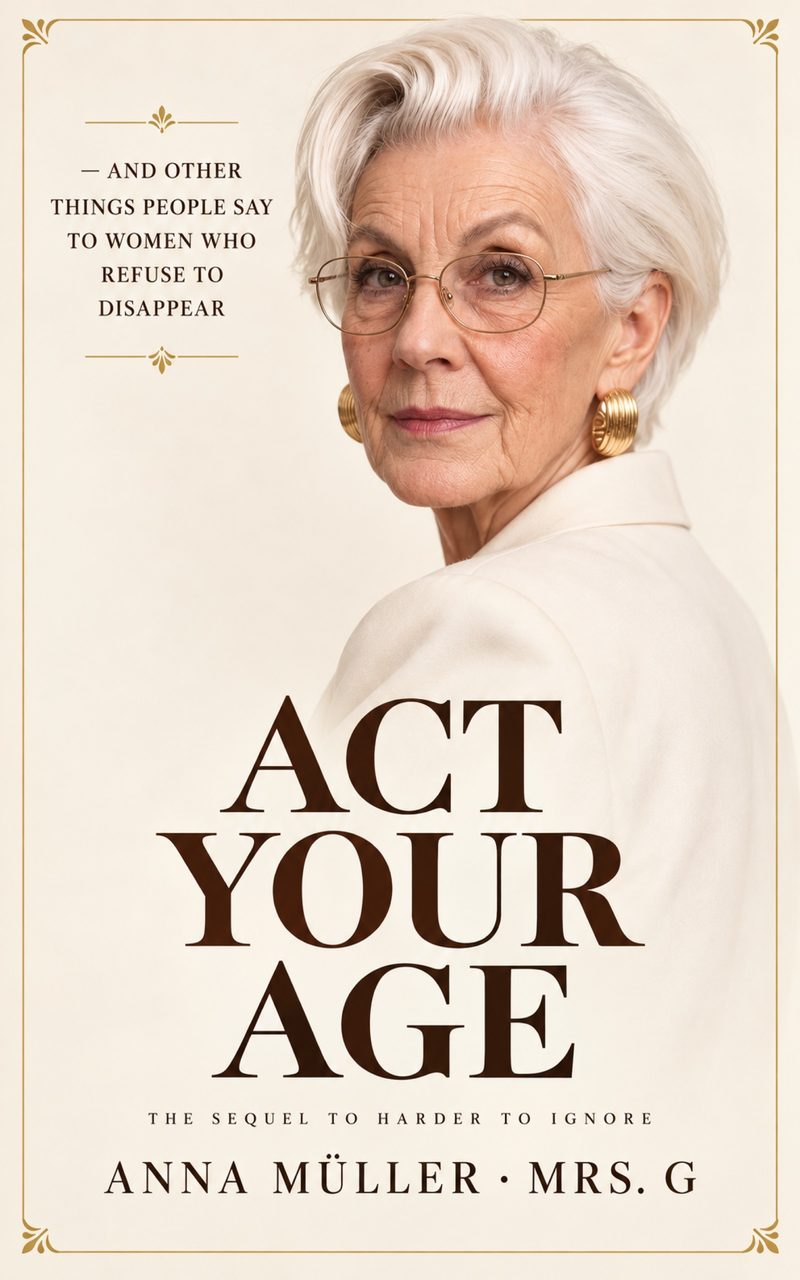
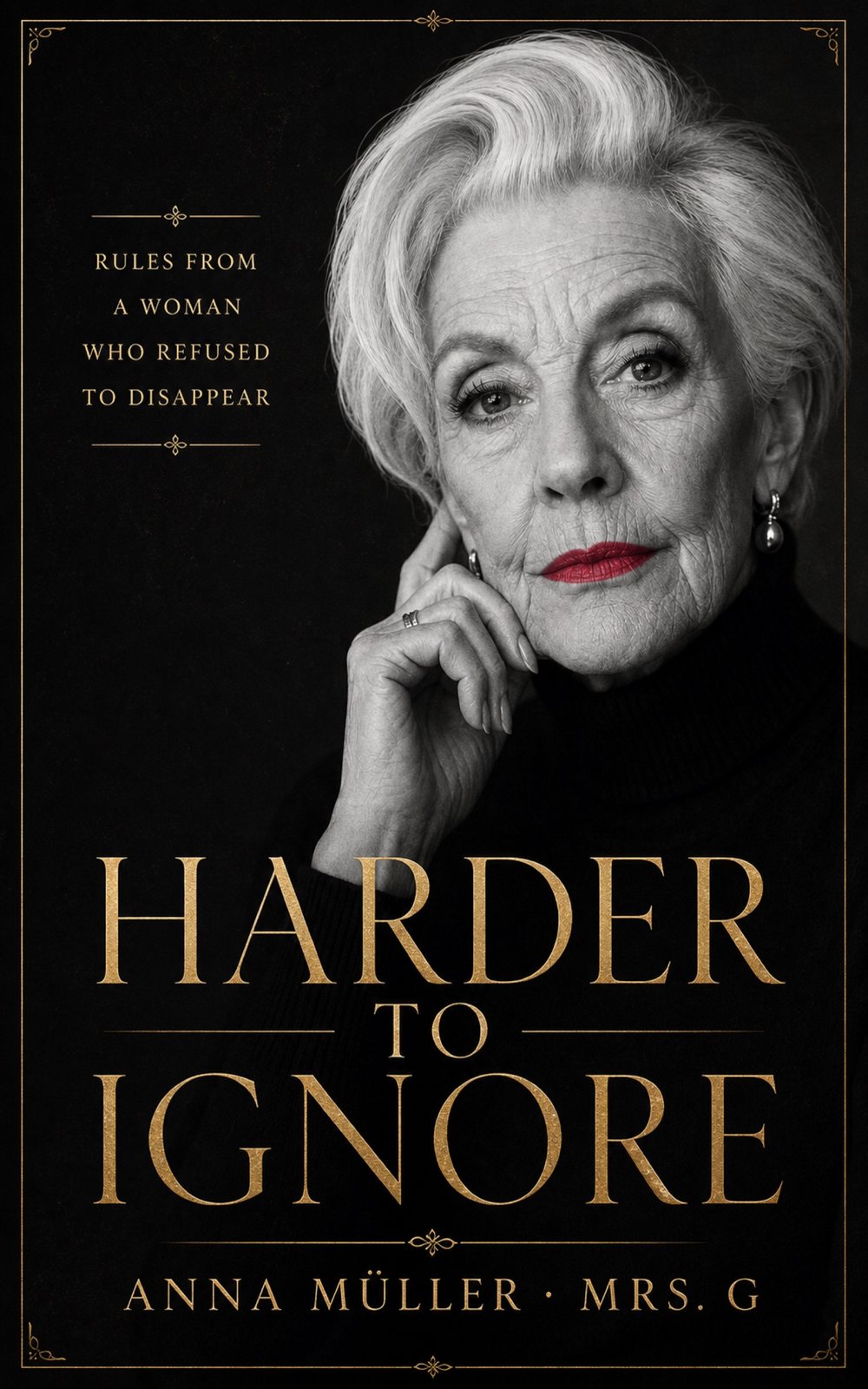
Rules from a woman who refused to disappear.
Fifteen handwritten letters. Fifteen rules. One woman who studied the art of disappearing so well that the way back took half a life — and then walked it anyway, in red.
Too old to behave properly.
Born above a laundry in Marseille, she learned quality from the wrong side of the fabric and built one of Europe’s quietly legendary fashion houses from nothing but pins, arithmetic and insomnia.
For sixty years she was a good girl: beautiful enough to be convenient, clever enough not to frighten anyone, strong enough to be relied upon. Then, at sixty-one, between two mirrors at a reception where a young man asked whose mother she was, she opened a golden tube of lipstick and stopped apologizing for the space she occupies.
Now she writes to her granddaughter Camille — long letters, in blue ink, the kind nobody writes anymore. Not advice. Invoices. What every courtesy cost.
“No one can make a woman invisible without her daily, tidy, well-brought-up assistance.”
Fifteen letters from an eighty-five-year-old woman to her newly-promoted granddaughter, each one closing with a single rule she didn’t invent — she paid for it. Some cost her years. Some cost her people. One cost her a man she only names near the end.
It moves from a laundry in Marseille to the finale of a Paris runway; from a grey dress that was “more dignified” to a red one worn at sixty-one with the back straight. It refuses self-pity, refuses sainthood, and refuses, above all, to be quiet.
Harder to Ignore is available for pre-order on Amazon now. Fifteen letters. Fifteen rules. One woman who decided visibility was not a request.
Want a note when the online conversation dates are set?
Or follow her daily
Mrs. G reads every answer herself. The questions are optional — but if you take a moment, you may be invited to a private online conversation with her.
Not a discount. Not a freebie. A real conversation — a group chat where everyone gets to ask their own question and get Mrs. G’s answer, personally. Complete the questionnaire and leave your email to be considered.
All five questions below are optional. Only your email is required.
One rule ends each letter. No long lists — she distrusted them. They give you the feeling of order instead of order.
Invisibility is not done to you — it is consented to. And any consent can be withdrawn.
Never confuse approval with the meaning of your life. Approval is issued for obedience; meaning, only for courage.
“Too much” is not a measurement — it is someone else’s fear they ask you to wear. It is never your size.
If you are paying for peace with yourself, it is not peace — it is rent. The landlord reviews the price every year.
A child learns from what you let your own life consist of. If you want your daughter not to vanish — don’t vanish.
Anything you do not sign yourself, the world will sign for you — with someone else’s name.
The costliest losses arrive dressed as prudence. Fear also bills you — merely in installments.
Comfortable emptiness is still emptiness. It simply takes longer to feel awkward about leaving.
Women are erased not by storms but by procedures. To say a name out loud is already sabotage. Say the names.
Permission is not issued — it is taken: quietly, in your own hand, preferably with a straight back.
A love that asks you to become smaller is not love — it is a vacancy. Do not apply.
A wardrobe is an autobiography you write on yourself every morning. Strike out the chapters that aren’t yours.
Count time like a bookkeeper, not a mourner: not “how much is gone” but “what remains, and what shall we spend it on.”
The best is not kept — keeping is the polite form of refusing your own life. The best is worn now.
“Too late” is a word from other people’s dictionaries. While you are alive, your train runs on schedule.
Take the risk —
and put on your lipstick.
On Tuesday you called me from New York. You told me you’d been promoted — your own office, your own authors, a desk that used to belong to a man older and louder than you. And then, almost without a pause: “I feel a little awkward. I’ve probably taken someone’s place.”
I recognized the voice. Not yours, my dear — mine. That is how I used to talk. At twenty-four, at thirty-one, at forty-six. I said that sentence in three languages, and every time it meant the same thing: forgive me for being here.
I am eighty-five years old, and I have spent the better part of those years apologizing for the space I occupy. I want it to cost you less time than it cost me. Better still — none at all.
From Cannes to Coachella, the gym to the front row — visible, on her own terms.